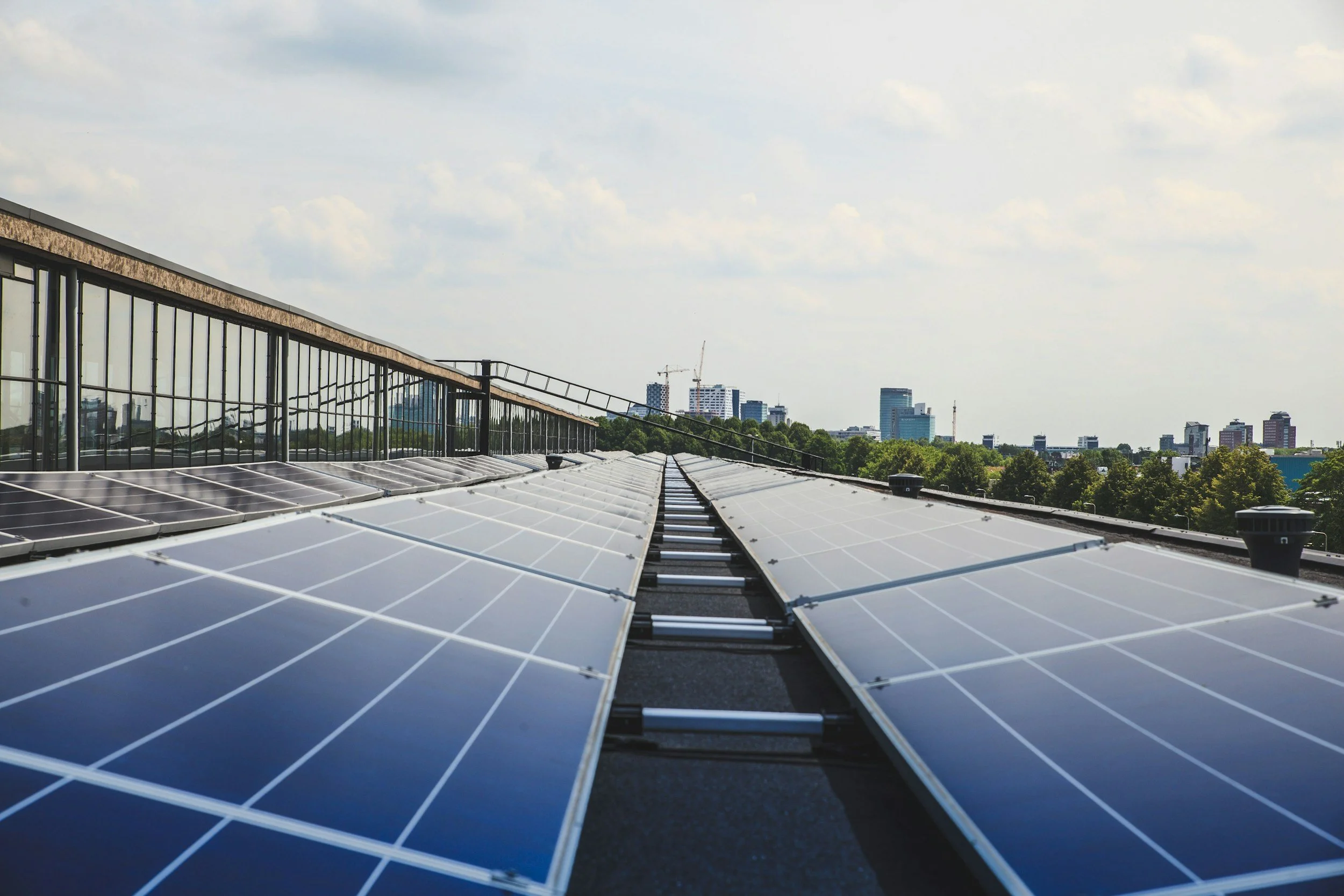
Battery Energy Storage System

Investment Pitch:
The Next Wave of AI Growth — Power Flexibility and BESS

Market Overview:
A US$1.5 Trillion Thematic Shift
Evolution of Investment Trends: AI power demand has catalyzed a rapid re-rating of the global power value chain, creating over US$1.5 trillion in market value in the past two years.
The Next Growth Core: Capital has rotated from nuclear power to grid infrastructure, backup generators, and most recently to fuel cells. Now, Energy Storage Systems (ESS) are emerging as the latest and most critical leg of value creation.
Core Drivers:
From "Base Load" to "Peak Shaving"
As AI applications shift from model training to "Inference," the profile of electricity consumption is undergoing a fundamental change:
Inference-Driven Volatility: Unlike predictable training workloads, inference is tied to real-time end-user activity, creating massive instantaneous power spikes and high-frequency noise.
Flexibility as a Necessity: Traditional grids and thermal generation are not designed to absorb these rapid, unpredictable swings. BESS, with its millisecond response speeds, is the only efficient solution for managing AI inference volatility.

Advantages:
Not Just "Batteries" but "Power Inventory"
Infrastructure Deferral Value: BESS acts as a capital efficiency lever, allowing for the deferral or downsizing of expensive, irreversible grid infrastructure investments. Case studies show that deferring a US$10 million investment for five years can generate approximately US$1.15 million in net deferral value.
LCOE Parity: In multiple regions, solar-integrated ESS costs are already competitive with gas peaking plants; in China, they have even reached parity with coal-fired generation.
Spatiotemporal Flexibility: BESS is modular and location-agnostic, allowing deployment directly at load centers like data centers to bypass grid interconnection wait times that can exceed five years.

Market Opportunity & Tech Advancement:
The Sodium Era
Demand Surge: Global annual incremental ESS deployment for data centers is projected to reach 321GWh by 2030, representing a doubling of current total ESS demand.
Cost-Down Dividends: The commercialization of Sodium-ion batteries is set to further reduce costs. At a production scale of 100GWh, sodium-ion prices could be 30% lower than LFP, while offering superior safety and low-temperature performance.
Investing in BESS is not merely an investment in storage hardware; it is an investment in the "Balance Sheet Buffer" of AI infrastructure. By utilizing "Power Inventory," the system can handle structural demand shocks without the risks associated with capital-intensive overbuilding.
Investment Value Summary: The Guardian of AI Infrastructure
Significance for Investors:
Growth Certainty:
The share of AI inference is expected to reach 45-50% by 2030, causing peak-shaving demand to surge accordingly.
The bottleneck for AI data center development has shifted from capital availability to "power lead times" and "peak load management". BESS represents the most economical and mature technological pathway currently available to alleviate power shortages and enhance data center uptime.
Policy Tailwinds:
The 30% Investment Tax Credit (ITC) in the U.S. and capacity power price subsidies in China significantly boost project IRRs (reaching as high as 22-36%).
Capital Efficiency:
Replacing "Capacity (Power Plants)" with "Inventory (Energy Storage)" reduces the risk of systemic overbuilding.
References :
1. Morgan Stanley's Official In-Depth Analysis: AI and the Energy Market Outlook
This article provides a detailed discussion of the "power bottleneck" issue mentioned in the report, pointing out that major tech companies will invest over $1 trillion between 2025 and 2026 to address their energy and computing power needs.
Official Link: Energy Markets Race to Solve the AI Power Bottleneck | Morgan Stanley
2. Key Investment Themes for 2026: AI and Energy Restructuring
This feature, written by Stephen C. Byrd, one of the report's lead authors, integrates the 2026 trends of AI proliferation and the reshaping of the energy structure. This is also the core framework mentioned in your document.
Official Link: Key Themes for 2026 and Beyond | Morgan Stanley
3. 2026 AI Market Trends: Investment, Risks, and Build-out
This article summarizes how AI-related infrastructure investments will flow into the global economy, with a special emphasis on the transition from "pilot applications" to "actual productivity solutions."
Official Link:AI Market Trends 2026 | Morgan Stanley